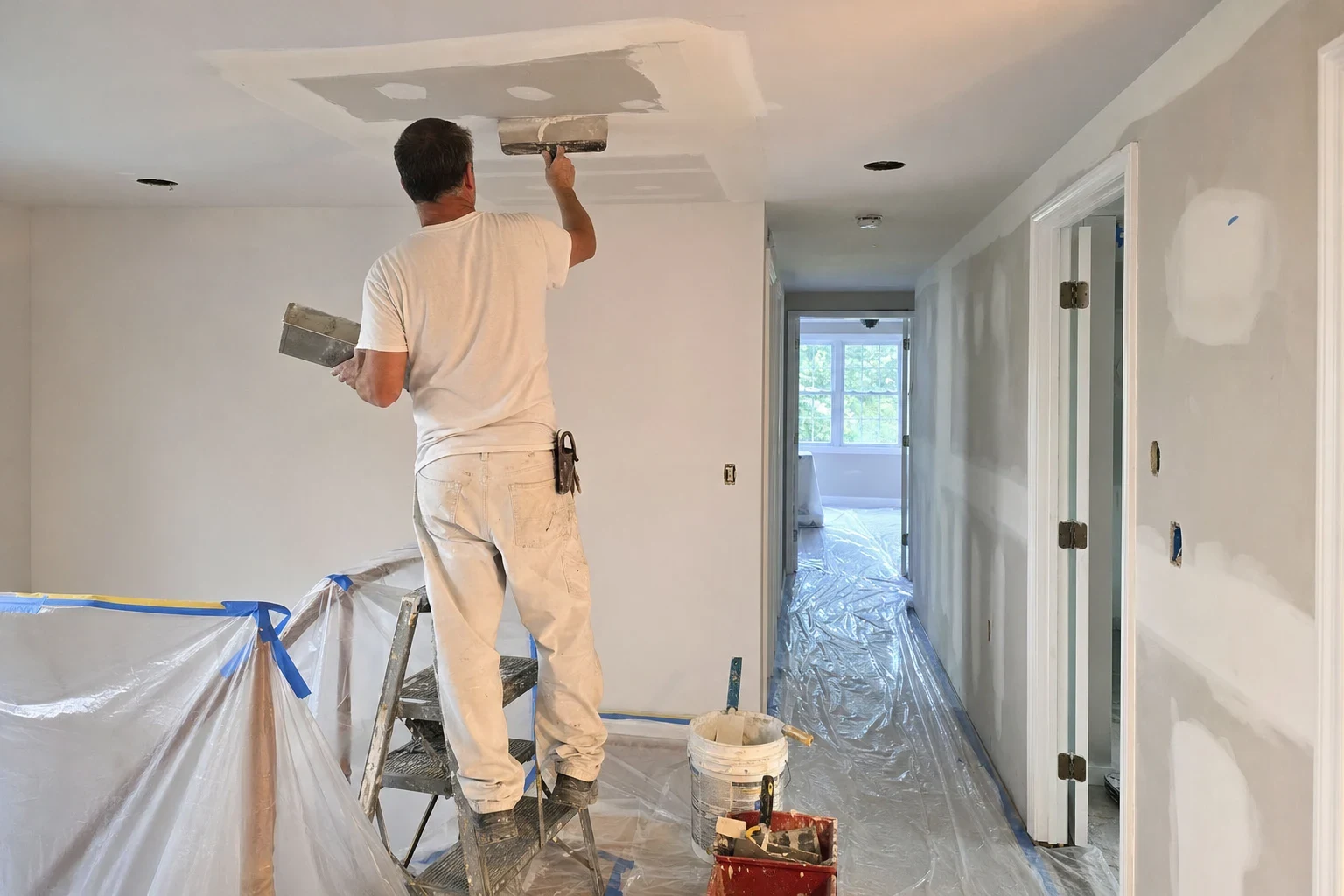
Drywall Repair in Harrison, From the Board to the Final Coat
We fix holes, cracks and sagging ceilings in your home, hang and finish new drywall, then prime and blend the repaired area into the wall around it. You hear which board, tape and compound we plan to use, and the reason for each, before work begins. We serve Harrison, Kearny, Newark and nearby towns.
- Line items on every estimate
- Patch blended into texture
- Floors covered, dust contained
- Straight repair-or-replace call
Drywall and Ceiling Services
Most calls start with a hole, a crack or a stain. Our work covers drywall repair, drywall patching, drywall hanging and drywall finishing, plus wall repair, ceiling repair, surface preparation and sanding, and paint touch-ups over the finished patch. Each service page walks through the materials involved, so you know what will go into your wall before we open a bucket of compound.
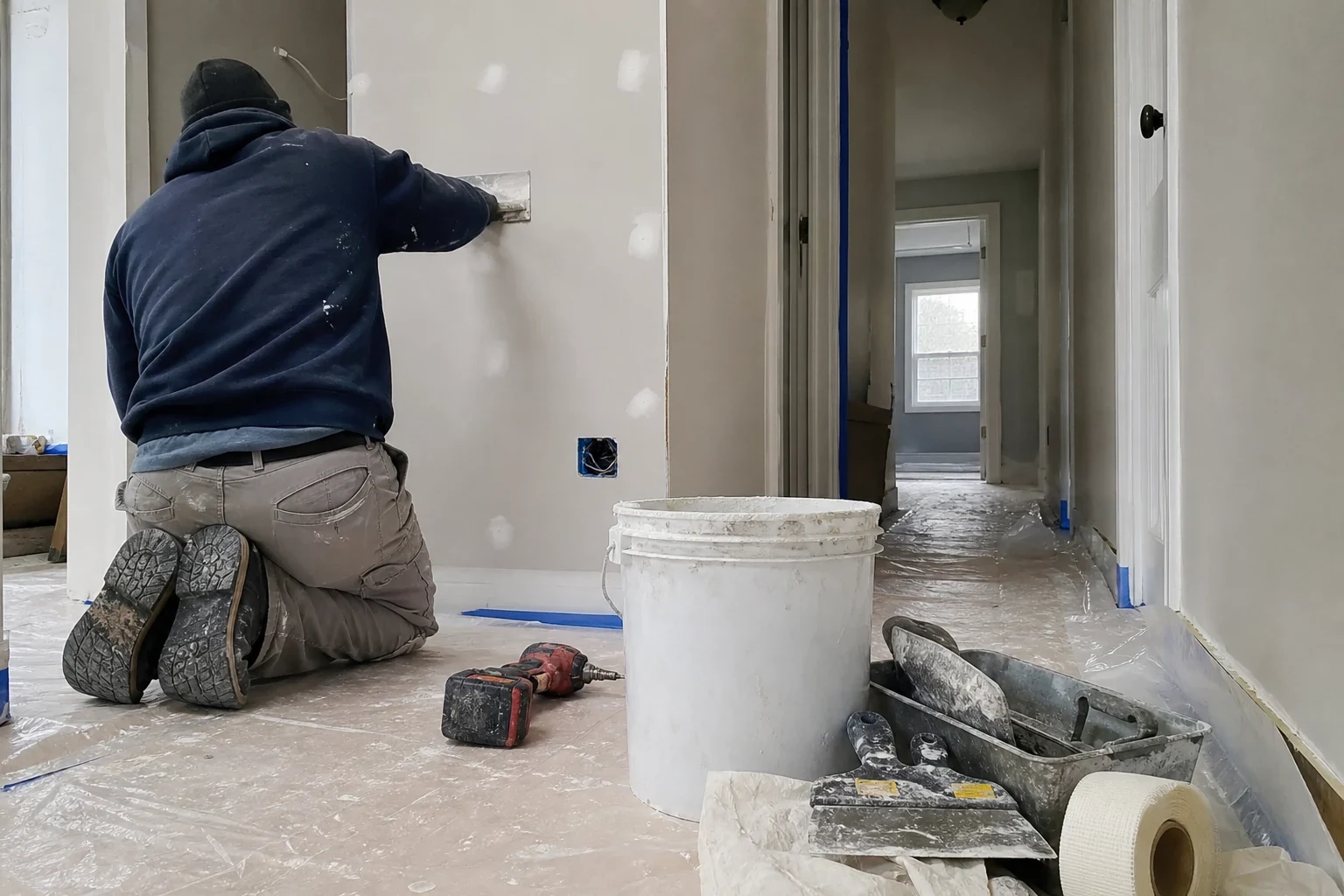
Drywall Repair
Cracks, holes, nail pops and water-stained board repaired with the right gypsum panel, tape and compound, then sanded and primed so the spot blends in.
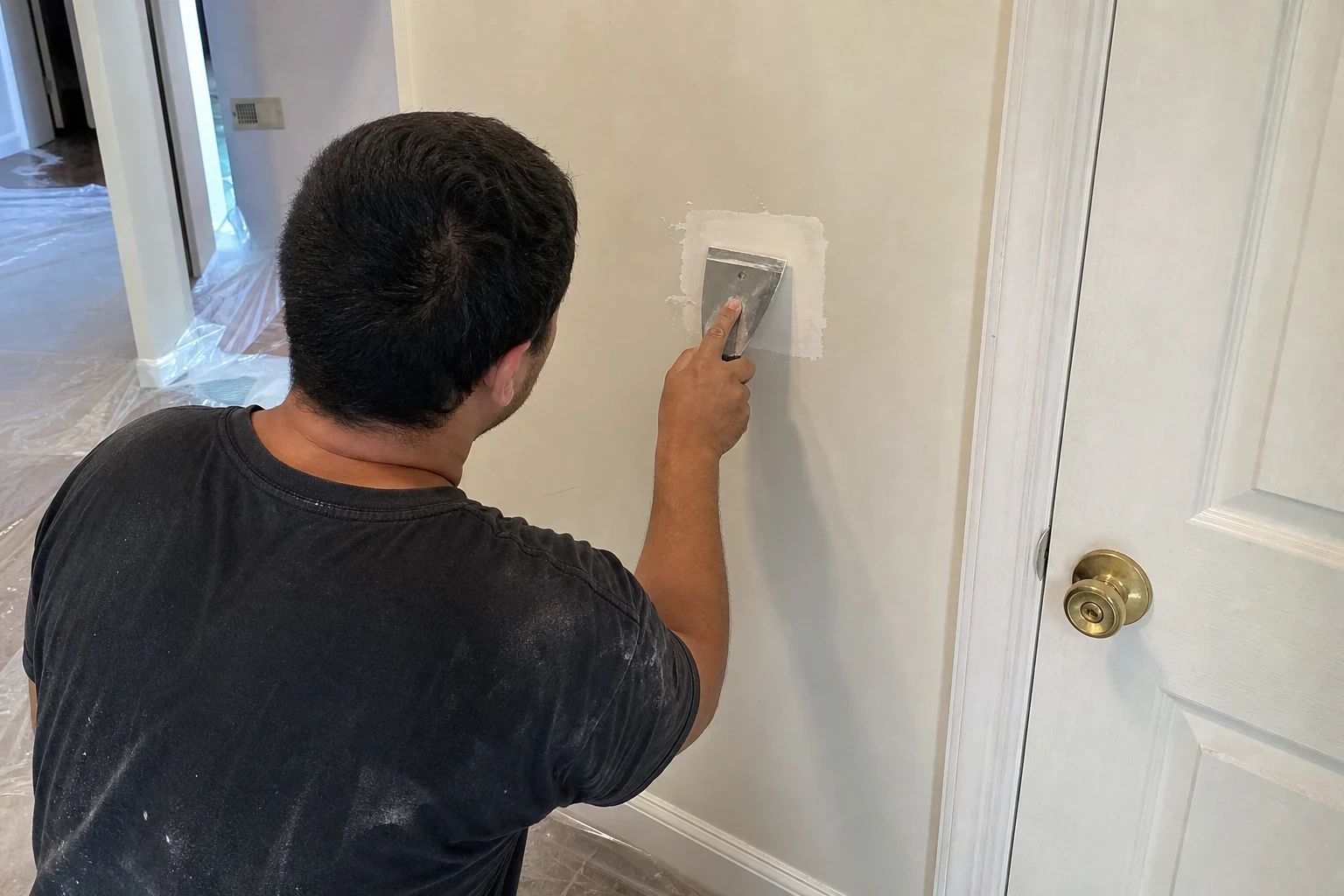
Drywall Patching
Holes from doorknobs, anchors, old fixtures and cut-outs, closed with the right backing and compound so the patch stays flat and disappears under paint.
Drywall Hanging
New drywall hung on walls and ceilings with the board type matched to each room, fastened tight and laid out for clean, strong joints.
Drywall Finishing
Taping, mudding, corner bead and sanding on new or repaired drywall, matched to the finish level your lighting and paint sheen actually need.
Wall Repair
Cracked plaster, loose lath keys, crushed corner bead and mixed plaster-and-drywall walls repaired with the compound and backing each surface actually needs.
Ceiling Repair
We repair water-stained, sagging and cracked ceilings in drywall or plaster, matching the board thickness and texture so the fix disappears overhead.
Surface Prep and Sanding
Filling, skim coating, dust-controlled sanding and the right primer, so repaired drywall and old plaster take paint evenly.
Paint Touch-Ups
Primer, color and sheen matching so repaired drywall blends into the paint around it, plus a straight answer when a touch-up is likely to show.
Primer and Paint
Priming and painting the walls and ceilings we repair or hang, so new joint compound and old paint end up as one even color and sheen.
What Moves the Price of a Drywall Job
No two holes cost the same to fix. The price depends on how much board comes out, what goes back in and how much finishing it takes to make the repair invisible. Here is what we look at when we put together your estimate.
Once we have seen the damage, you receive a written estimate with every line spelled out. If opening the wall reveals a problem nobody could see from the surface, work pauses, we show you what turned up, and the next step is your decision.
- Size and number of repairs
- One fist-sized hole and a dozen scattered dents take different amounts of time. When several repairs are handled on the same visits, the setup and drying time are shared across all of them, which keeps the total down.
- Board type
- Standard half-inch board suits most walls. Five-eighths Type X is used where fire rating matters, such as garage walls shared with living space, and moisture-resistant board belongs in bathrooms. Heavier or specialty board costs more and takes longer to hang.
- Plaster versus drywall
- A lot of the older housing in this area has plaster over wood or metal lath. Tying new drywall into a thick plaster wall needs shims, bonding agent and extra coats to bring the surfaces level, so it adds labor.
- Finish level and texture
- A Level 4 finish works under flat paint in most rooms. Walls under strong side light or glossy paint may need a Level 5 skim coat across the whole surface. Matching a texture also adds steps.
- Ceilings and access
- Ceiling work means overhead finishing, staging and often a drywall lift. High stairwells and tight closets also take more time.
- Damage behind the surface
- Wet insulation, rotted framing or rusted corner bead found during demolition changes the scope. We show you photos before we do any added work.
How a Job Runs
Joint compound needs drying time, so most repairs take more than one visit. Here is the usual order of work.
- 1
Phone call and look at the damage
Tell us what happened and where it is. Then we look at it in person, check for moisture and loose fasteners, and decide whether patching or replacement fits.
- 2
Written estimate
You get the scope, materials and number of visits in writing, so you know which days we will be in your home.
- 3
Protect, cut and hang
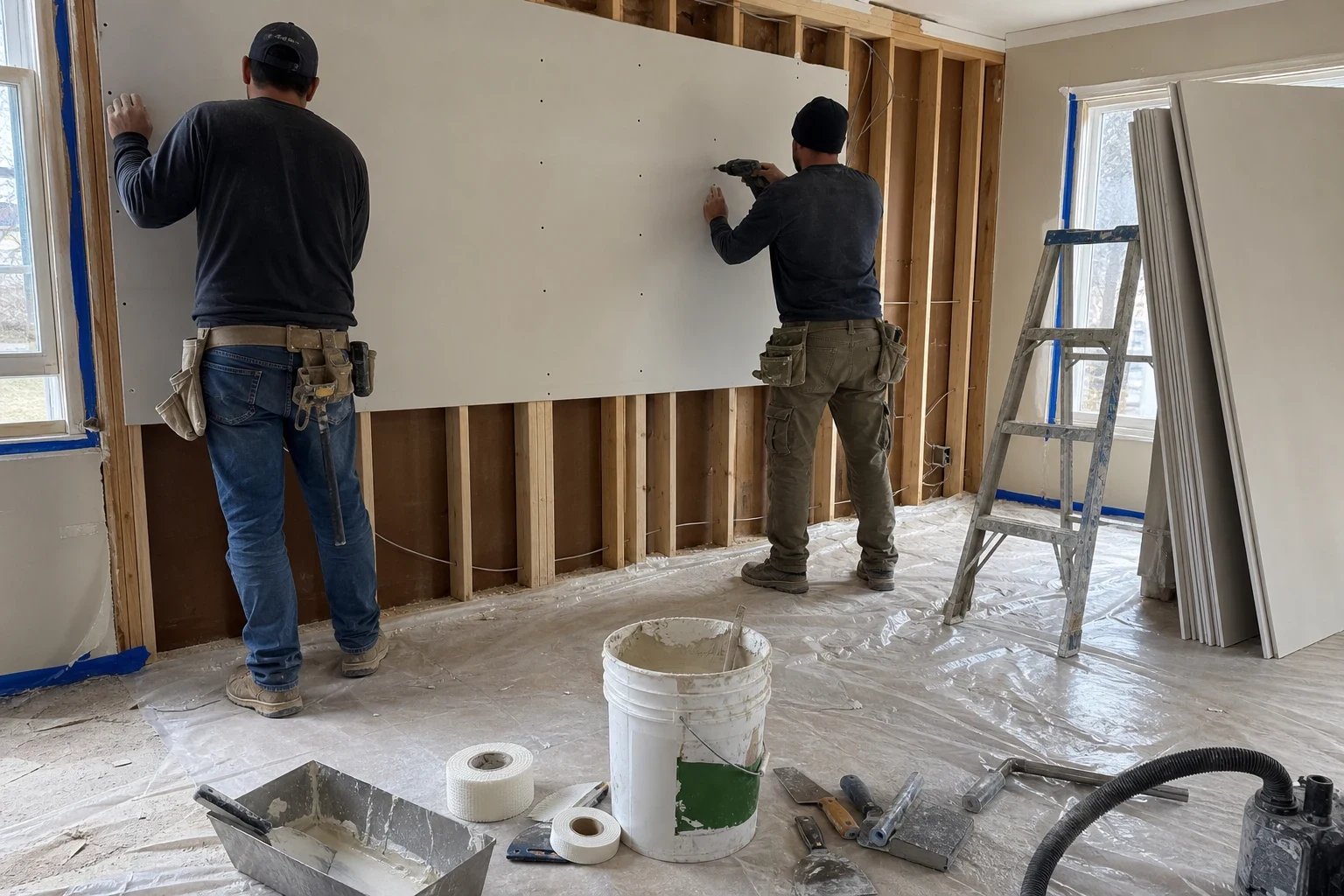
We cover the floors and furniture, cut back to sound board or framing, add backing where needed and fasten new drywall with screws.
- 4
Tape, coat and sand
We bed the tape and apply two or three coats, letting each one dry or cure. Then we sand smooth under a work light so ridges show up before the paint does.
- 5
Prime, touch up and clean
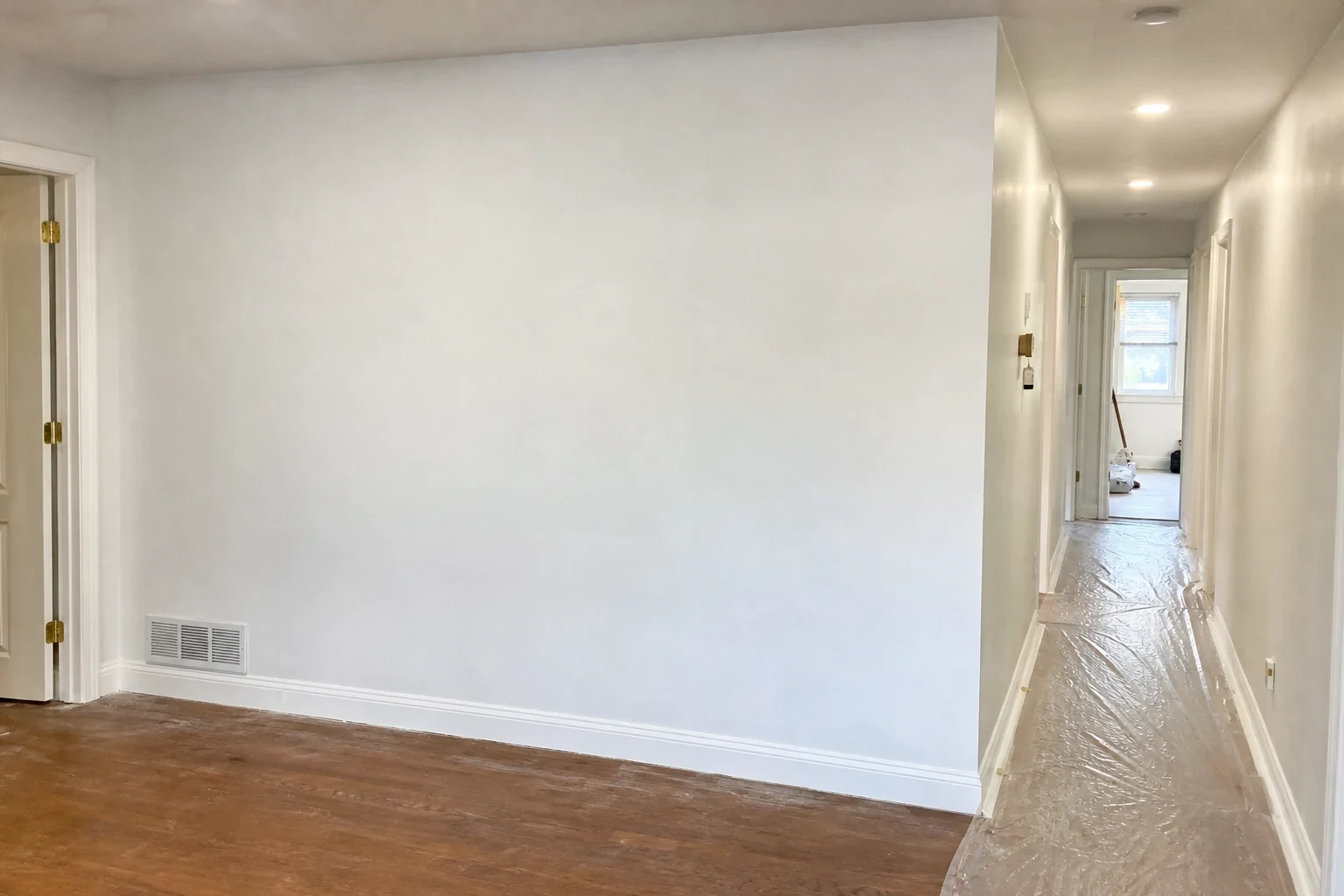
Fresh compound absorbs paint at a different rate from the painted wall beside it. A coat of primer evens that out, then we touch up the repaired spot and clean the room.
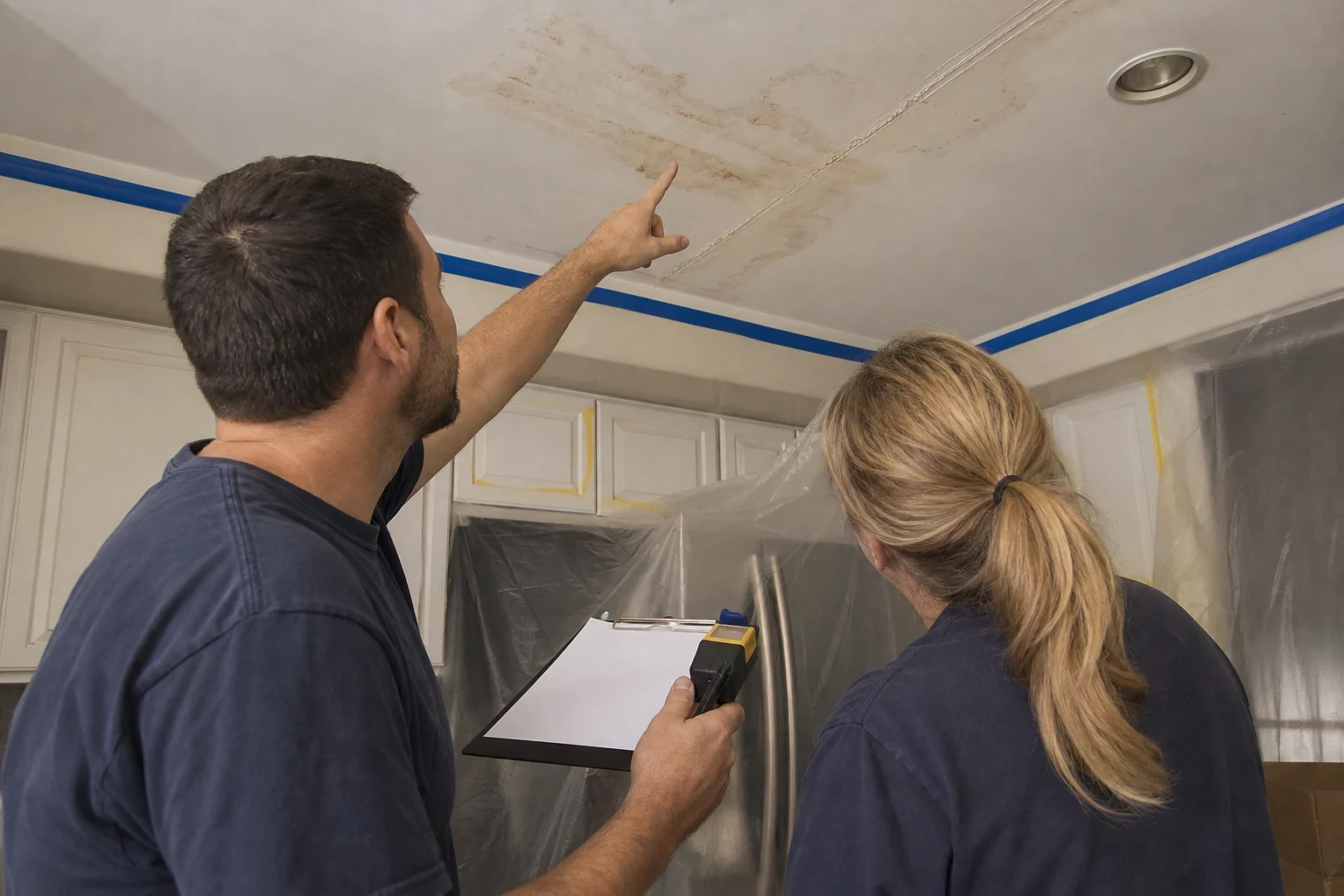
Why Homeowners and Landlords Call Us
A repair holds up only as well as the materials under the paint. We pick them for the cause of the damage, then show you the choice.
We name the materials
Your estimate lists the board thickness, tape type and compound. A doorknob hole might get a California patch with all-purpose mud. A long ceiling crack gets paper tape bedded in setting-type compound, which cures by chemical reaction and shrinks less.
We fix the cause first
Nail pops come from framing that shrinks and pushes fasteners out, so we re-secure the board with screws before we patch. If a stain points to an active leak, we tell you so it gets fixed before new drywall goes up.
Texture that disappears
Orange peel, knockdown and smooth walls each need a different approach. We test texture on scrap board and adjust it until it matches what surrounds the patch.
A clean work area
Drop cloths go down over the floor and plastic goes over furniture before any sanding starts. When the layout allows, doorways get sealed off, and our sanders run with dust extraction attached. At the end of each visit we vacuum and wipe the surfaces near the repair.
Repair or replace, honestly
Often a patch is enough, and we will say so. When board is soft, moldy or has sagged between ceiling joists, patching it would only hide the problem, so we show you why replacement is the better choice.
About Drywall Repair Harrison
We are a drywall company in Harrison, NJ, working inside homes, rentals and multi-unit buildings around Hudson and Essex counties. Most of our work is repair: holes from doorknobs and moving day, cracks over doorways, sagging ceiling sections and patches left after an electrician or other trade has opened a wall.
We talk through the materials with you, because that is where most repairs succeed or fail. Mesh tape on a corner that moves will crack again. Lightweight topping compound on a deep fill will shrink. When you know why we chose paper tape, hot mud or a particular board, you can judge the estimate yourself and decide with confidence.
Drywall Questions We Hear Often
Will I be able to see the patch afterward?
Not if the finishing is done right. We feather the compound well past the edges of the repair, sand under raking light and match the texture around it. Priming before the paint touch-up keeps the patch from flashing, which is a dull or shiny spot where bare mud soaked up paint differently.
Should I patch this or replace the whole section?
Holes, dents and cracks in sound board are almost always patched. Board that is soft, crumbling, moldy or sagging between joists should be cut out and replaced, because a patch over it will not hold. We show you what we found and why one option makes more sense than the other.
My house has plaster walls. Can you still fix them?
Yes. Small plaster damage can often be filled with setting compound after we secure the loose areas. For larger holes, we cut back to solid plaster, shim new drywall flush with the old surface and blend the joint with bonding agent and several coats.
Why does the job take more than one day?
Joint compound shrinks as it dries, so a coat applied over damp mud tends to crack or bubble. Humid summer weather stretches that drying time. Setting-type compound hardens faster, and we use it where it suits the repair, but a typical patch still takes two or three short visits.
How messy will it be?
Sanding drywall makes fine dust, so we plan for it. We lay floor protection, cover furniture, seal doorways with plastic when we can and use dust-control sanders. When we finish, we vacuum and wipe down the work area.
The damage came from a leak. Will insurance cover it?
That depends on your policy and how the damage happened, and the adjuster makes that call, not us. We can photograph the damage and write a line-item estimate you can pass along with your claim. Make sure the source of the water has been fixed and the area is dry before new board goes in.
Do I need a permit for drywall work?
Small repairs and patches usually do not need one. Larger jobs, such as replacing whole walls or work tied to other trades, may need a permit through the local construction office. If your job needs one, we tell you up front and include it in the plan.
Where We Work
We are based in Harrison and work across the nearby area, including Kearny, East Newark, Newark and Jersey City. We also take jobs in Belleville, Bloomfield, East Orange, Orange, Irvington and Elizabeth.
- Harrison
- Newark
- Kearny
- East Newark
- Jersey City
- Elizabeth
- East Orange
- Irvington
- Bloomfield
- Belleville
- Orange
If your town is missing from this list, phone us with your location. We will check whether our schedule allows a visit and give you a straight answer.
Get Your Drywall Repaired
Tell us about the crack, hole or stain when you phone. We will explain which board and compound fit the repair, then book a visit so we can examine the damage up close.