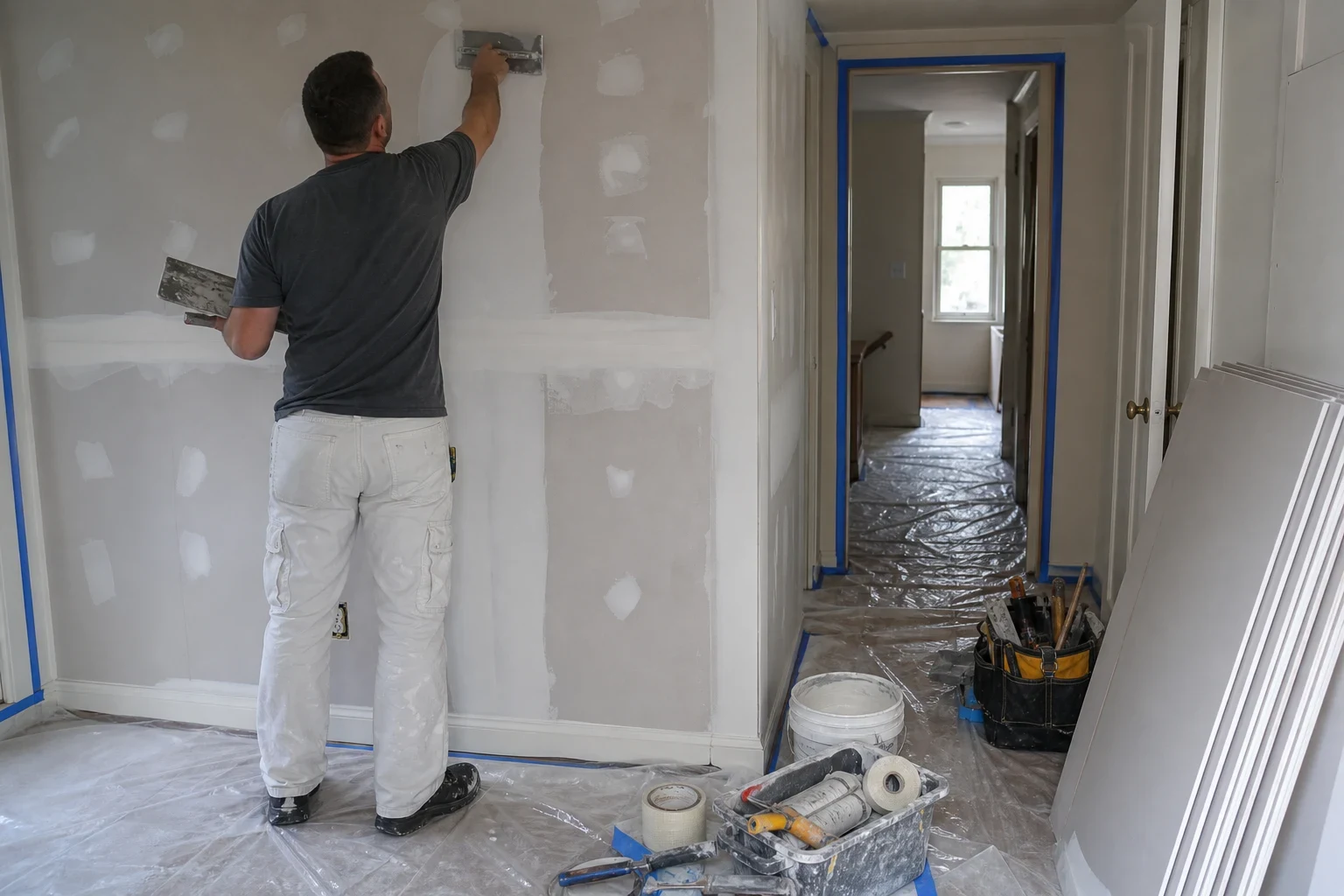
ServicesWall Repair
Wall Repair in Harrison
We repair interior walls of every build: plaster on wood lath, plaster on gypsum board and modern drywall. We figure out what your wall is made of and why it failed, then repair it with materials that bond to it and stay put.
Wall Repair Starts With Knowing What the Wall Is
Not every wall is drywall. Many homes in the area still have three-coat plaster over wood lath, some have a thin veneer plaster over blueboard, and plenty have both after decades of renovations. Each one cracks, loosens and takes repairs differently. Spackle pressed into a plaster crack usually reopens within a season because the crack moves and the filler does not.
So the first thing we do is identify the substrate. Plaster that has lost its keys behind the lath gets reattached with plaster washers and screws before anything is filled. Deep voids get a setting-type compound that hardens chemically and shrinks very little. Drywall gets paper or mesh tape and joint compound suited to the job. If a section is better replaced than repaired, we tell you and show you why.
When the damage is limited to standard gypsum board, our drywall repair and drywall patching pages go into more detail. This page covers the wider job: walls of any build, including the awkward spots where old plaster meets newer board.
What Our Wall Repair Covers
- Plaster crack repair
- We open hairline and stress cracks into a shallow V, fill them with setting compound and embed fiberglass mesh across the line. The mesh spans the movement so the crack is far less likely to telegraph back through.
- Reattaching loose plaster
- When plaster sounds hollow or bows out, the keys holding it to the lath have broken. We pin it back with plaster washers and screws, and where needed inject adhesive behind it, before skimming over the hardware.
- Filling holes in plaster walls
- Large holes get a backing of gypsum board cut to the plaster depth, shimmed flush, then built up with base coat and finished. Matching the thickness matters, since plaster is often thicker than half-inch board.
- Damaged drywall sections
- Dents, doorknob holes and water-softened board are cut back to sound gypsum and replaced. Seams are taped and coated so the new piece sits flat with the old.
- Corner bead and outside corners
- Dented or rusted metal corner bead gets cut out and replaced with new metal or paper-faced bead, then feathered into the wall plane.
- Texture matching and a clean work area
- We match smooth, sand-float or light orbital texture so the repair blends in. Floors are covered, dust is contained and we vacuum before we leave.
When a Wall Is Telling You It Needs Work
A filled crack that reopens
A crack that shows up again in the same spot means the last fix only plugged the gap. The wall is still moving there, so the line has to be cut open and reinforced with mesh rather than filled a second time.
Hollow sound or a soft bulge
Tap the wall. A dull, hollow sound or a section that flexes under your hand means plaster has separated from the lath and could eventually come loose.
Stair-step cracks over doors and windows
Diagonal cracks running from the corners of openings come from framing settling and seasonal humidity swings. They are common and repairable once properly reinforced.
Staining or crumbling after a leak
Gypsum loses strength when it stays wet. Brown rings, flaking paint or chalky, crumbling plaster mean the wall behind the paint has been damaged, even after the leak is fixed.
Nail pops and seam ridges
Small round bumps or raised lines along drywall seams point to fasteners backing out or tape losing its bond. They are minor now and get bigger if ignored.
What Affects the Cost of Wall Repair
Price depends mostly on what the wall is made of and how much of it has failed. A drywall dent is a short visit; a plaster wall with loose keys across several square feet takes more compound, more hardware and more drying time. We explain each part of the estimate when you call so nothing comes as a surprise.
Plaster versus drywall
Plaster repairs take more steps: reattachment, depth matching and multiple base coats. Drywall is usually quicker to cut out and replace.
Size and number of areas
One crack and a dozen scattered ones are different jobs. Grouping repairs into one visit makes better use of drying time between coats.
Condition behind the surface
Opening a wall sometimes turns up broken lath, damp framing or plaster that crumbles at the edges, and that can enlarge the repair. If it happens, we stop, point out the problem and talk it over with you before cutting any wider.
Smoothness and existing texture
A flat wall that catches side light needs extra skim coats and careful sanding to hide the repair. Recreating an old hand-applied texture adds time as well.
Access and room setup
Stairwells, tall walls and fully furnished rooms need scaffolding, extra protection or more setup time.
How a Wall Repair Job Runs
- 1
Look and listen
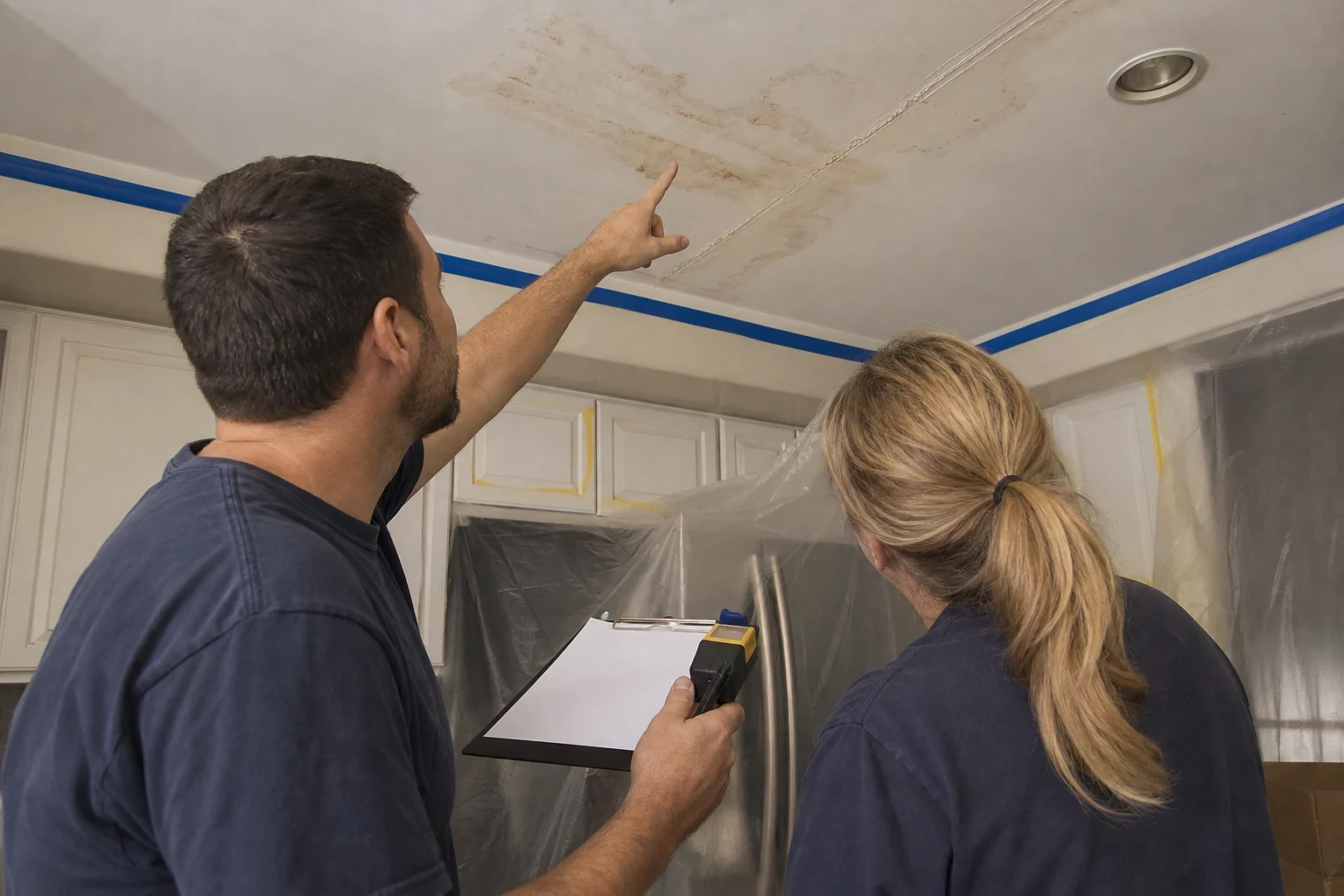
We inspect the wall, tap for loose areas, check the substrate at an existing hole or outlet, and look for the cause of the damage. You get a straight answer on repair versus replacing a section.
- 2
Protect the room
We lay canvas over the floor along the work wall and shift or wrap nearby furniture. If the job calls for sanding, plastic sheeting gets taped over doorways to keep dust in one room.
- 3
Stabilize and fill
Loose plaster is reattached first. Then we fill and tape with the compound that suits the surface, usually setting compound for depth and lightweight joint compound for finish coats.
- 4
Finish and blend
We feather the final coats wide, sand with a fine screen and match the surrounding texture. If you want it, a primer coat and a paint touch-up close out the job.
- 5
Clean up and walk through
We vacuum, remove debris and go over the finished wall with you under good light, so you can see the result before we pack up.
Wall Repair Questions
Can you repair plaster, or do you replace it with drywall?
We repair plaster whenever it is sound enough to keep. Plaster is dense, quiet and durable, and a good repair preserves it. If a section is badly crumbled or detached across a large area, we may recommend cutting it out and fitting gypsum board shimmed to the same thickness.
Why does my plaster crack keep coming back?
Most likely it was filled with spackle or premixed compound alone. Those fill the gap but cannot hold against seasonal movement. We open the crack, use setting compound and embed mesh tape across it so the repair can handle the movement.
How long will the room be out of use?
Small drywall repairs often wrap up quickly. Plaster work with deep fills can need several coats with drying time between them, sometimes over more than one visit. You will know the expected schedule before any work begins.
Will I be able to see where the wall was fixed?
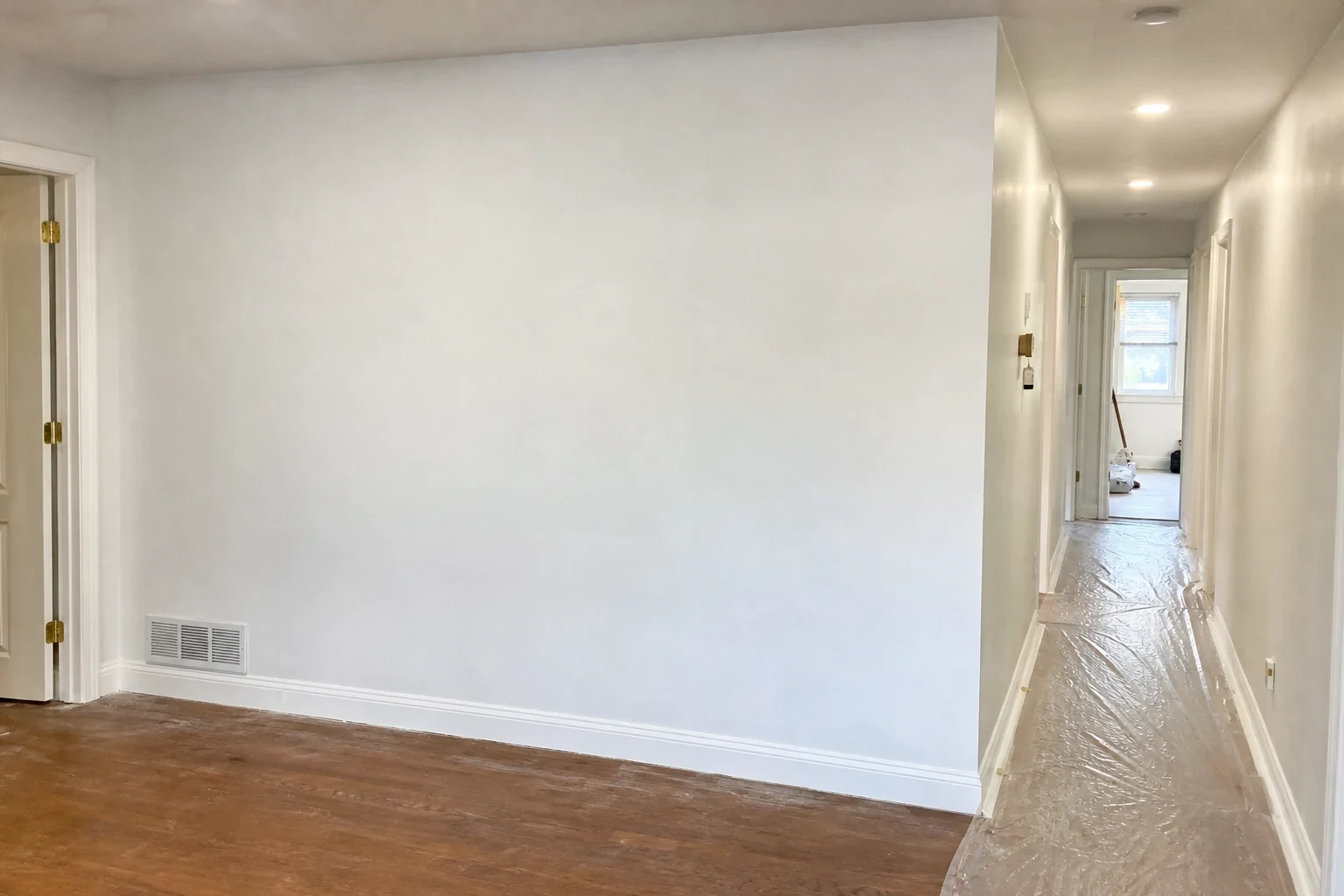
Once the area is primed and painted, it should not stand out. Most of that comes from texture matching and feathering the compound well past the damaged spot. Glossy paint and walls lit from the side are less forgiving, so there we may suggest finishing the full wall plane for an even look.
Do you handle walls with a mix of plaster and drywall?
Yes. Older homes around Harrison and Kearny often have plaster rooms with drywall patches from past renovations. The transition is where cracks start, so we bridge it with mesh and setting compound and level both surfaces to one plane.
Get the Right Repair for Your Wall
Describe the crack, bulge or hole and which room it is in, and we will walk through the likely cause and the repair that fits that surface. One phone conversation covers your quote and a day for us to see the wall in person.