ServicesCeiling Repair
Ceiling Repair in Harrison, NJ
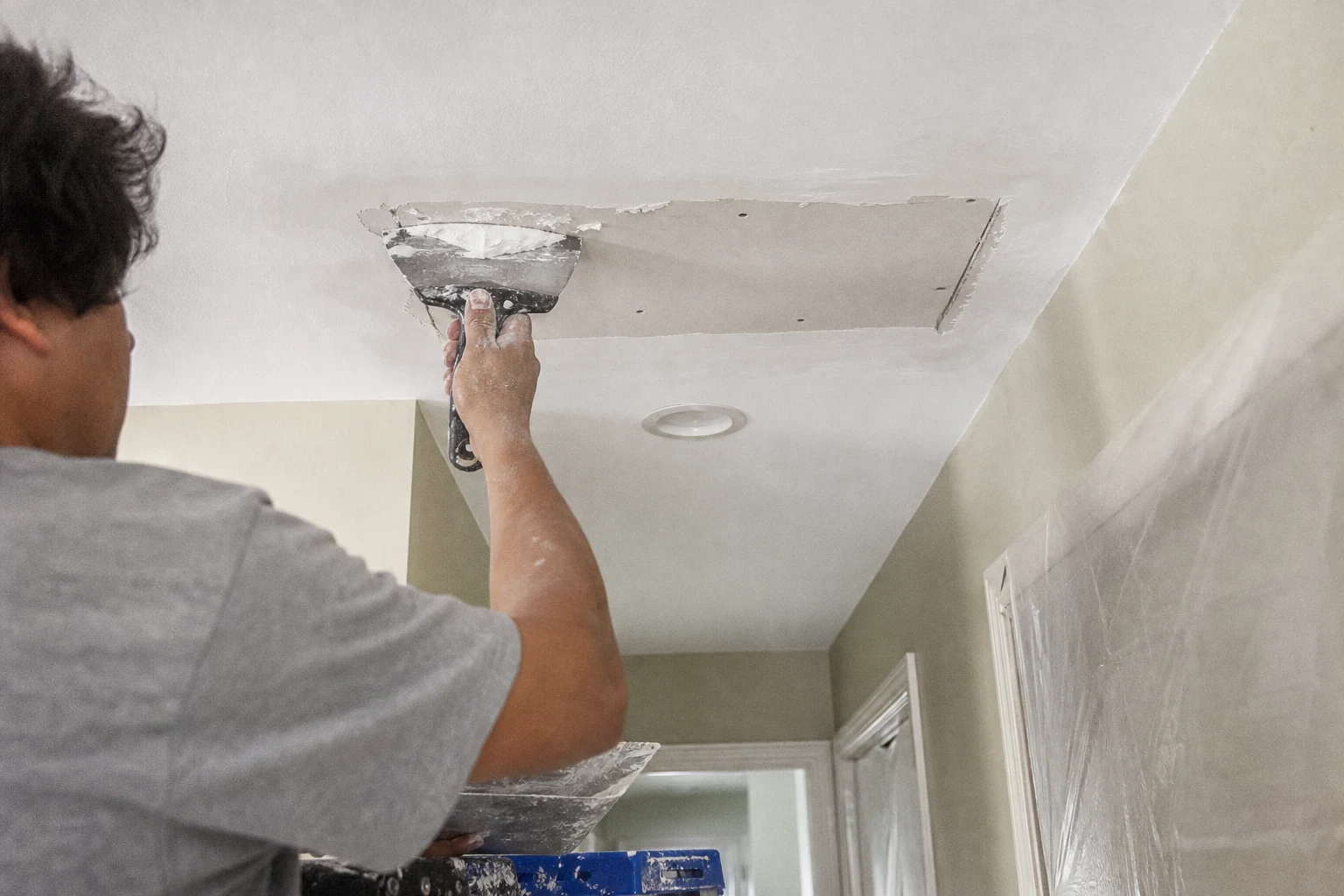
We fix ceilings that are stained, sagging, cracked or opened up after a leak. We find the cause, cut back to sound material, install board rated for ceiling spans and match the existing texture, so you get a flat, solid surface again.
Ceilings fail differently than walls
A ceiling carries its own weight against gravity, and anything that softens it shows up fast. Water from a bathroom or radiator above swells the gypsum core and breaks the paper bond. Joist movement pushes fasteners down. Heavy texture adds load. That is why a ceiling repair is not just a bigger wall patch: the board, the fastener spacing and the compound all have to suit a horizontal span.
Many homes in Harrison still have original plaster and lath overhead, while newer rooms and basements are usually drywall. We repair both, and we tell you which material we found and why we chose the replacement we did.
What our ceiling repair includes
- Moisture check before cutting
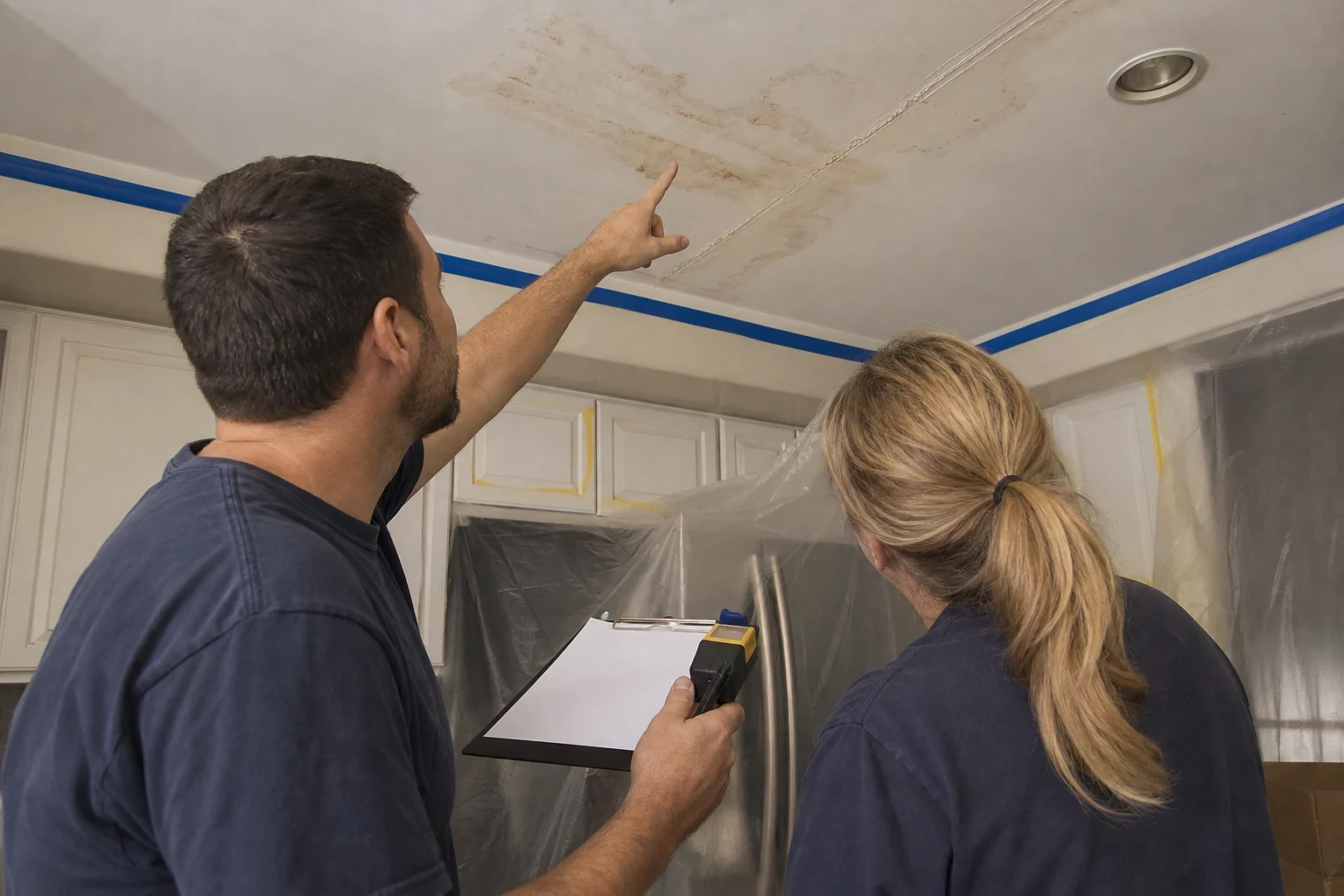
- We test the stained area with a moisture meter and look for the source. Patching over a wet ceiling only traps the problem and the stain bleeds back through.
- Sag-resistant board
- We use 1/2-inch ceiling board, which is made to resist sagging between joists, or 5/8-inch board where the span is wide or the existing ceiling is thicker. Matching thickness keeps the repair flush with the surrounding surface.
- Proper fastening to framing
- New pieces are screwed to joists, with wood backing added at the cut edges where needed. Screws hold better than nails overhead and do not back out the way old ring-shank nails often do.
- Plaster-to-drywall transitions
- When we tie new drywall into old plaster, we shim the board to bring it level with the thicker plaster, then bridge the joint with setting compound and tape so the seam does not crack later.
- Texture matching
- We match flat, knockdown, orange peel and sprayed textures by testing on scrap first. Getting the pattern and spacing right matters more on a ceiling, because light from windows rakes across it.
- Dust control and cleanup
- Before any cutting, drop cloths go down and plastic sheeting closes off doorways so dust stays in one room. When the work wraps up we vacuum and wipe down surfaces, and the primed patch is ready for a paint touch-up.
Signs your ceiling needs repair
Brown rings or yellow stains
These mark water that has already soaked into the gypsum. Even after it dries, the core may be soft and the paper may be letting go.
A sag or bulge between joists
A dip means the board has lost strength or its fasteners have pulled through. Keep people out from under it and do not poke it.
Nail pops in a line
Small round bumps along a joist line come from wood shrinking or framing shifting. One or two are cosmetic; a whole row usually means the board is loosening.
Cracks along seams or corners
Straight cracks at taped joints point to failed tape or weak compound. Spiderweb cracks in plaster can mean the keys holding it to the lath have broken.
Peeling or flaking texture
Texture that sheds usually lost its bond to moisture or to paint that was never primed. Spot repairs blend in only after the loose material is scraped away.
What moves the cost of a ceiling repair
Ceiling work takes more setup and more care than the same area on a wall, so price depends on what we find once the damage is open. We explain each item on the estimate before any work starts.
Size and number of areas
One stained section between two joists is a smaller job than a run of damage across a room or several rooms.
Drywall or plaster
Plaster ceilings need shimming, careful transitions and extra compound to blend new board into the old surface.
Texture type
A smooth ceiling is simplest to match. Knockdown, sprayed or hand-applied textures take test passes and more time to blend.
Height and access
Stairwells and tall ceilings need scaffolding or planks, and a room full of furniture takes longer to protect.
Drying and return visits
If the ceiling is still wet, the job may need a drying period before we close it up, which adds a visit.
How a ceiling repair job runs
- 1
Look and diagnose
We inspect the damage, check for moisture and confirm whether the ceiling is drywall or plaster. You get a written estimate that lists the repair area, material and texture work.
- 2
Protect and open up
We lay drop cloths, move or cover furniture and cut the damaged section back to solid material and framing. Wet insulation or debris above is removed so the cavity can dry.
- 3
Install and tape
New board goes up with screws into joists and backing. We embed the tape in a powdered compound mixed on site. It hardens on a timed chemistry rather than by slow evaporation, so the joint locks up firm overhead and shrinks far less than premixed bucket mud.
- 4
Finish and texture
We apply finish coats, sand smooth and match the surrounding texture. Then we prime so the patch takes paint evenly, and clean the room before we go.
Ceiling repair questions
Can you patch the stain, or does the board have to come out?
If the area is dry and still firm, sealing the stain with a stain-blocking primer may be enough. If the gypsum is soft, crumbling or sagging, we cut it out and replace it. We press on it, meter it and tell you which case you have.
Should I fix the leak before calling you?
Yes. Stop the water source first, because new board over an active leak will fail. Once it is fixed, we check that the cavity has dried before closing it up.
My ceiling has popcorn texture. Can you match it?
We can match sprayed acoustic texture closely. Popcorn put up before the 1980s sometimes includes asbestos, so in an older home we need a lab result on a sample before anyone disturbs it with a saw or sander. Once it comes back clear, we cut, patch and re-spray to blend.
Will you work with my insurance claim?
We can document the damage with photos and a line-item estimate that you can share with your insurer. Coverage decisions belong to your adjuster, so we explain the repair, not the policy.
How messy is a ceiling repair?
Cutting and sanding overhead does make dust, since gravity brings it straight down. We hang plastic at the doorways, put drop cloths under the work and vacuum at the end of each day. Most of the dust stays inside the sealed-off area.
Get your ceiling flat and solid again
Tell us what you see overhead, how long it has been there and whether the leak is fixed. We will talk through the likely repair and the material it calls for, then schedule a visit.