ServicesPrimer and Paint
Primer and Paint Over Drywall Repairs in Harrison
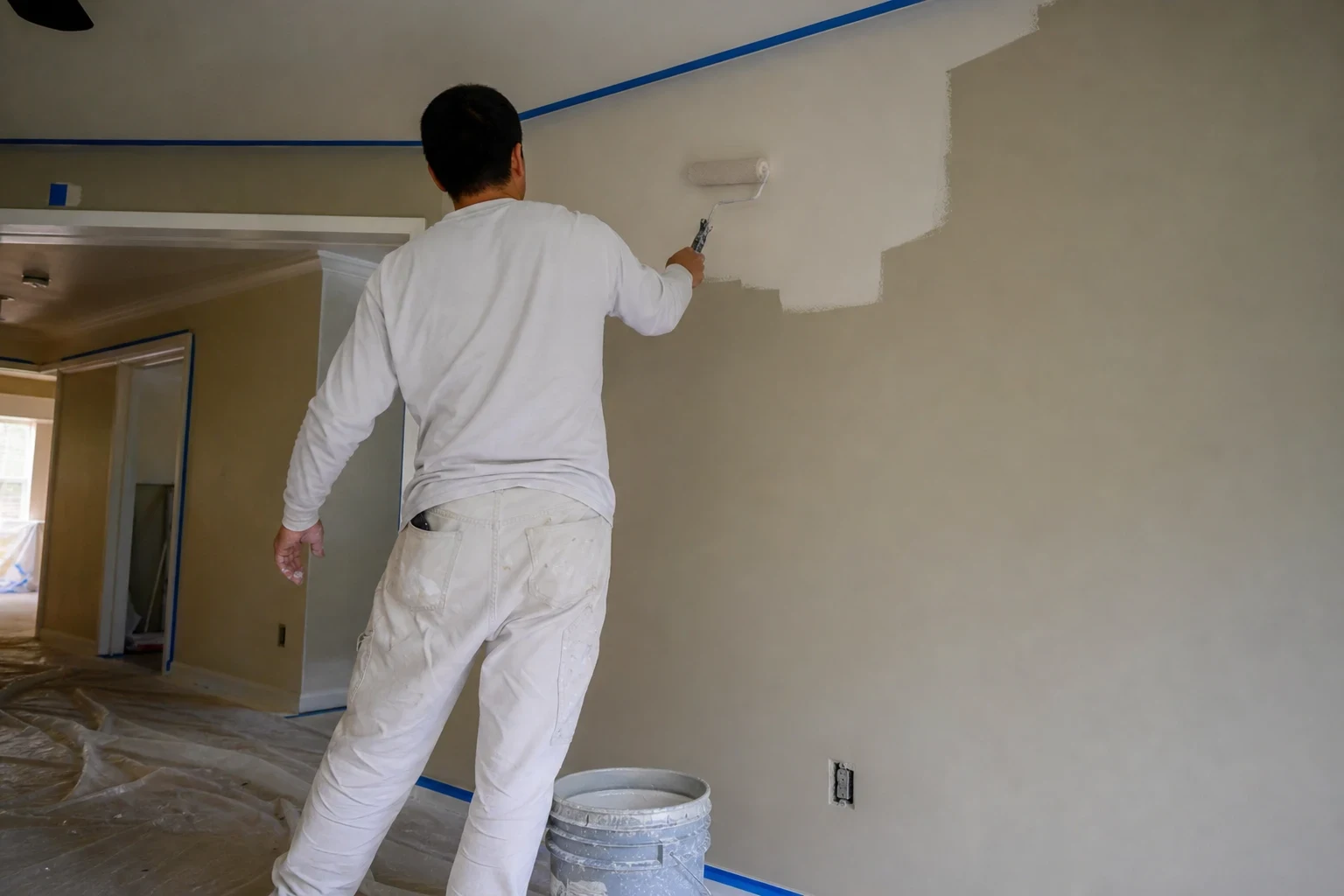
Fresh drywall and joint compound soak up paint differently than the wall around them. We prime and paint the surfaces we repair or hang, choosing the primer and sheen for each room so the finished wall reads as one even surface.
Painting That Finishes the Drywall Job
Our painting covers the walls and ceilings we have repaired, patched, hung or finished. Paint is the last layer of drywall work, and it is where poor prep shows. Bare paper facing and joint compound are porous at different rates, so a topcoat rolled straight over them dries dull over the seams and glossy over the paper. Painters call that flashing.
We fix it with materials, not extra coats. A PVA drywall primer seals new board and fresh compound so the topcoat sits on a uniform surface. A high-build primer fills fine sanding scratches on a smooth wall. Where a ceiling has a water stain, a shellac or oil-based stain-blocking primer stops the brown ring from bleeding through latex paint. In older homes with plaster walls, we check adhesion first, because new paint can lift old, chalky layers.
What the Work Includes
Primer chosen for the surface
PVA primer for new drywall, high-build primer for smooth finishes, and stain-blocking primer over water marks or smoke residue. Each one solves a different problem, so we match it to what is under the paint.
Sheen matched to the room
Flat hides small flaws on ceilings and large walls. Eggshell and satin wipe clean in hallways and bedrooms. Semi-gloss holds up to humidity in bathrooms and kitchens but shows every ripple, so it needs a better-finished wall underneath.
Color matched to existing paint
When we paint only the repaired wall, we bring a chip of your existing paint to be color-matched. We paint corner to corner so any slight difference lands at an inside corner, where it reads as shadow.
Cutting in and rolling
Brushed edges at ceilings, trim and corners, then a roller with the right nap for the texture. A smooth wall takes a short nap, while a knockdown or orange peel texture needs a thicker one to reach the low spots.
A clean work area
Floors covered, furniture moved or wrapped, outlet plates removed and stored. We pick up drop cloths and tape before we leave.
Signs a Repaired Wall Needs Primer and Paint
A patch you can still see
If a repaired spot shows as a dull rectangle in raking light, the compound was painted without being sealed. A coat of primer and a full wall of topcoat usually clears it.
Stains coming back through
A water ring that returns after one or two coats of latex is bleeding through. It needs a stain-blocking primer, not more paint.
New drywall still bare
Unpainted board collects dust and the paper facing can scuff. Once the finishing is done, priming soon protects the surface.
Peeling at old repairs
Paint that lifts in sheets often went over dusty sanding or a glossy surface without primer. We scrape back to a sound edge and start again.
How a Painting Day Runs
- 1
Look and test
We check the surface in side light, test old paint for adhesion with tape, and note any stains or texture. That tells us which primer and roller to bring.
- 2
Protect and prep
We cover floors, remove plates, and lightly sand any repaired areas. Dust is wiped off, because primer will not bond well to sanding powder.
- 3
Prime
Primer goes on the repaired and new areas, or the whole wall when the surface is mixed. It dries before any topcoat is applied.
- 4
Two topcoats
We cut in the edges and roll the field in sections, keeping a wet edge to avoid lap marks. A second coat follows once the first has dried.
- 5
Walk-through and cleanup
We look at the wall with you in daylight, touch up anything that needs it, and put plates back on.
What Moves the Price
Most of the cost sits in preparation and in how many surfaces we paint, not in the gallons of paint. We look at the room, explain what it needs, and give you a clear quote by phone or after a visit.
- Wall area and ceiling height
- More square footage means more time. Tall stairwells and cathedral ceilings need ladders or planks, which slows the work.
- Type of primer
- A standard PVA coat is quicker than a stain-blocking primer, which needs more ventilation and drying time.
- Condition underneath
- Peeling layers, nail pops or chalky old paint have to be dealt with before painting. Sound walls go faster.
- Patch versus full wall
- Painting one repaired spot rarely blends. Painting the whole wall costs more but avoids a visible square.
Questions About Priming and Painting Repaired Walls
Something not covered here? (973) 397-5568
Do you paint rooms that had no drywall work?
No. Our painting is tied to drywall work: the walls and ceilings we repair, patch, hang or finish. Painting is how we close out that job so the repair disappears into the room.
Why can't you just paint over the patch?
Joint compound absorbs paint faster than the surrounding wall, so the patch dries flatter in color and sheen. Sealing it with primer first, then painting the full wall, keeps the finish even.
Can you match my existing paint?
We can match color closely from a chip of your wall. Sheen matters just as much, so we confirm whether the room is flat, eggshell or satin before painting.
Will it smell?
Most latex primers and paints have low odor and dry quickly. Stain-blocking primers, especially shellac and oil-based ones, smell stronger, so we ventilate the room and use them only where a stain needs it.
How soon can I hang pictures?
Latex paint is dry to the touch in an hour or two, but it takes longer to cure fully. Giving the wall a couple of days before hanging frames or pushing furniture back helps avoid marks.
Ready to Finish Your Repaired Walls
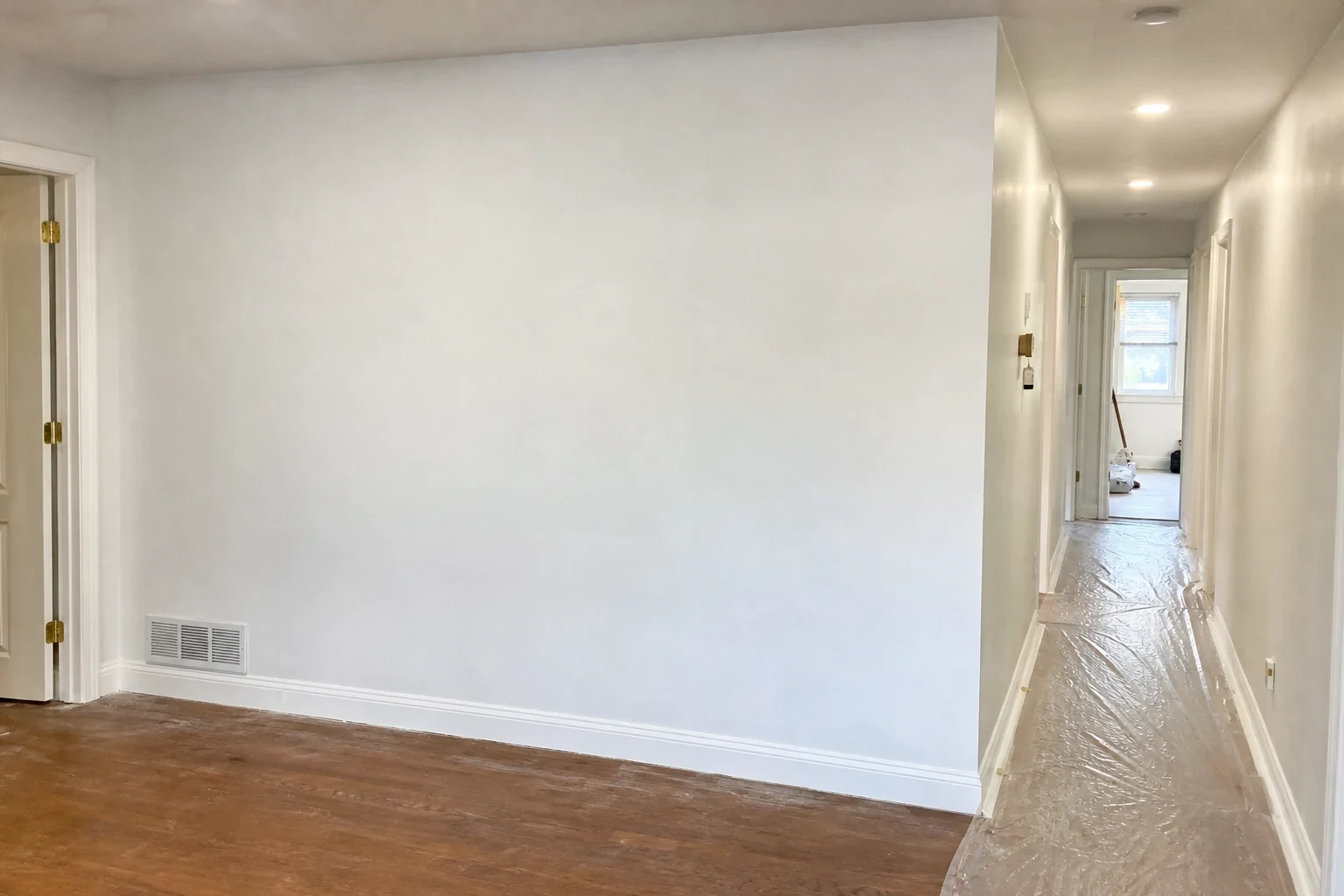
Tell us what was repaired, what the room is used for and what paint is on the walls now. We will explain the primer and sheen we would use and what the work involves.