ServicesPaint Touch-Ups
Paint Touch-Ups in Harrison, NJ
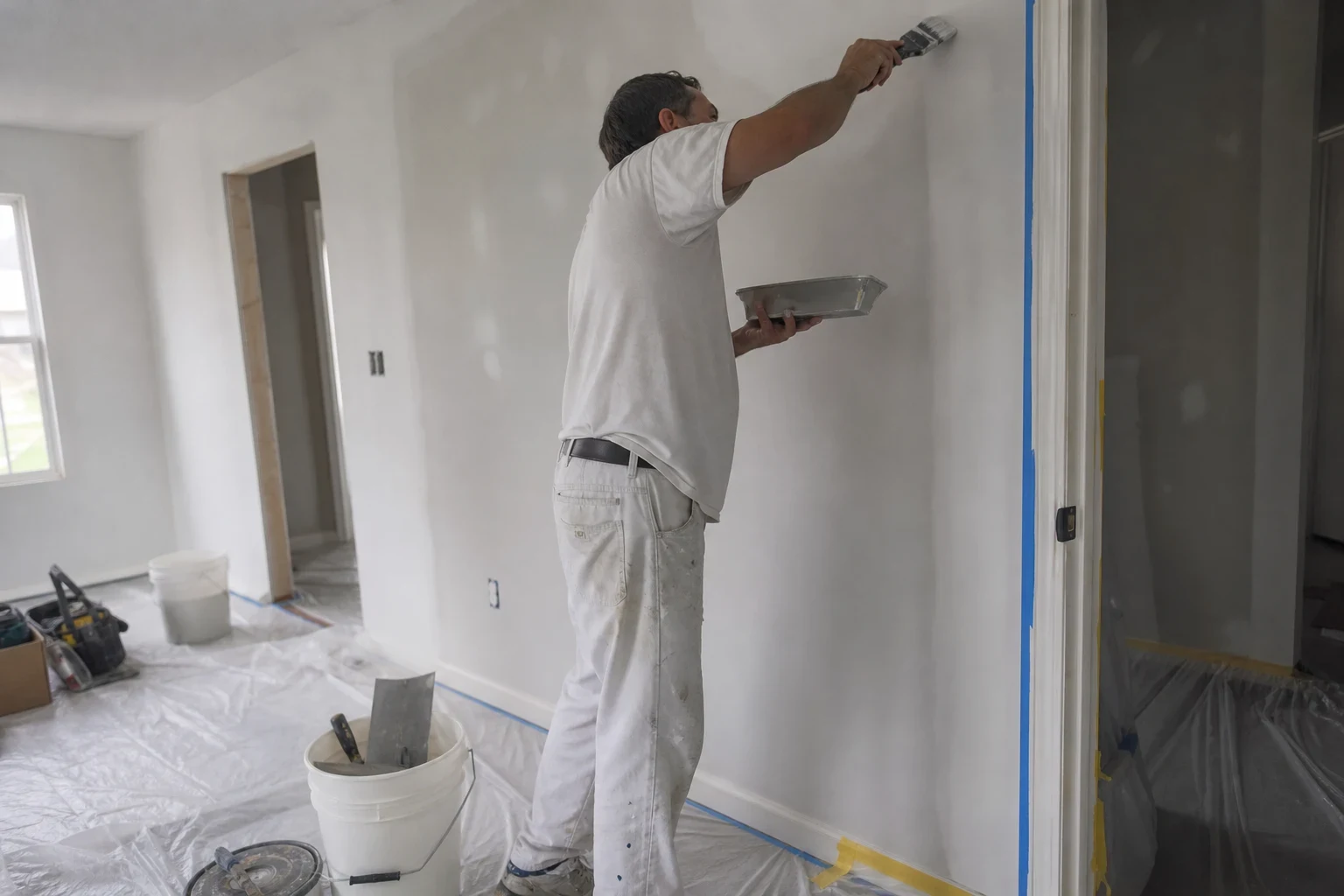
Once a drywall patch is sanded smooth, the finish coat decides whether the repair disappears. We seal new joint compound with primer, match the color and sheen already on your wall, and thin the edges out so the spot blends instead of reading as a dull square when window light hits it.
When a touch-up works and when it won't
A paint touch-up covers a small area with paint that matches what is already on the wall: a repaired patch, scuffed corners, nail holes or a dried water mark. It is usually the last step after drywall patching or drywall repair, and it decides whether anyone ever notices the repair.
Touch-ups have limits, and we tell you about them before we start. Flat and matte finishes hide small touch-ups well because they scatter light. Eggshell, satin and semi-gloss reflect it, so fresh paint beside paint that has aged for years can flash, reading shinier or duller at certain angles. On those walls we may suggest carrying the paint to the nearest inside corner or break, where the edge lands somewhere the eye does not catch it.
Paint also shifts color as it ages, especially on walls that get strong sun. We check the existing finish closely before we tell you how well a touch-up will blend.
What a touch-up from us includes
- Primer over new joint compound
- Fresh mud and exposed drywall paper absorb paint far more than a painted surface. If you skip primer, the topcoat soaks in and dries flatter than the wall around it. We seal patches with a drywall primer first so the finish coat dries to the same sheen.
- Color matching
- If you have the original can or the color name, we start there. If not, a small chip of the existing paint can be scanned and tinted. We test the match on the wall and let it dry before committing, because wet latex reads darker than it will look dry.
- Sheen matching
- Color is only half the match. We identify whether the wall is flat, matte, eggshell, satin or semi-gloss and use the same sheen, since the wrong one shows even when the color is perfect.
- Stain-blocking primer where needed
- Water marks, marker and old smoke stains bleed through latex paint, sometimes after it looks covered. We spot-prime them with a shellac or oil-based stain blocker first.
- Matching the paint film texture
- A roller leaves a slight stipple and a brush leaves lines. We apply with the same kind of tool and a similar roller nap as the original, and thin the edges out rather than building them up.
- A clean work area
- Drop cloths go down before any sanding or painting. When we finish, we pick up, wipe dust off nearby surfaces and take our materials with us.
Signs your walls need a paint touch-up
Patches still showing white or gray
A drywall patch left in bare joint compound is unfinished. It also picks up grime easily and can dust onto furniture below.
A shiny or dull square on the wall
That is flashing from an earlier touch-up done without primer or in the wrong sheen. It usually needs priming and a better-matched coat, sometimes carried to a corner.
Scuffs along hallways and stair walls
High-traffic walls collect marks that cleaning will not lift, especially on flat paint, which does not scrub well.
Holes from shelves, anchors and pictures
Once the holes are filled and sanded, the spots need paint so they stop catching light.
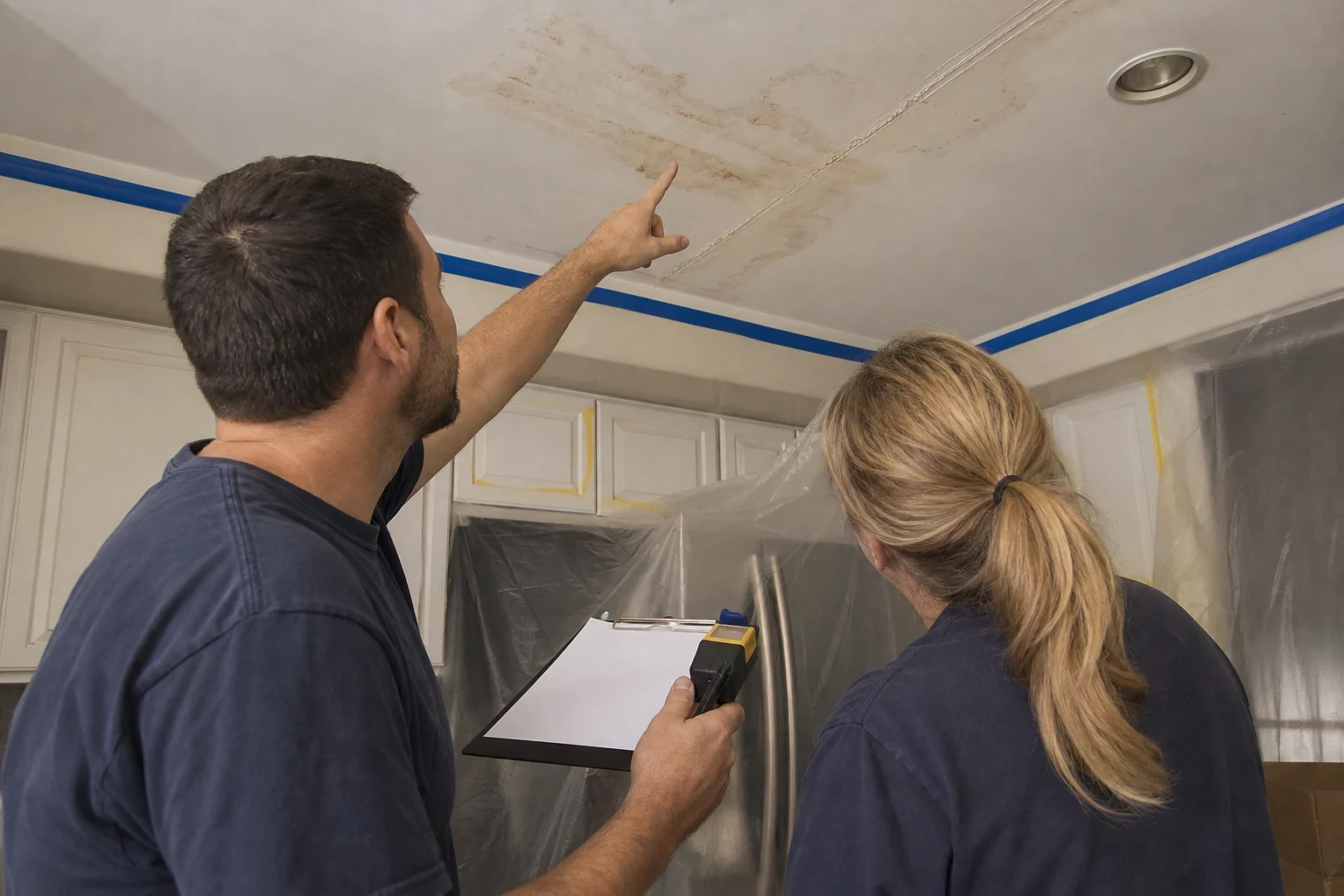
A dried water stain on a ceiling
Once the leak above has been fixed and the drywall is dry and sound, the brown ring needs a stain blocker before any paint, or it will come back through.
What moves the cost of a touch-up
A touch-up is priced by what the wall needs, not just how big the spot is. Primer type, sheen and how far the paint has to carry often matter more than square footage. We explain what we see and what the work involves before we begin.
Number and spread of spots
Three holes on one wall take less time than scuffs spread across several rooms, since each area needs its own prep and drying time.
Sheen and how far the paint carries
Flat walls often take a small, contained touch-up. Satin or semi-gloss may need paint carried to a corner to avoid flashing, which covers more surface.
Paint supply and matching
Usable leftover paint saves a step. Without it, the color has to be scanned, tinted and tested.
Stains and oil-based paint
Stain blockers and bonding primers add a coat and drying time before the finish coat can go on.
Height and access
Ceilings and stairwell walls need ladders or planks and more care moving around furniture.
How the work goes on the day
- 1
Read the existing finish
We identify the sheen and check whether the paint is latex or oil. A cotton swab with denatured alcohol softens latex but not oil, and many older Harrison homes still have oil paint under later coats. Latex over oil needs a bonding primer or it can peel.
- 2
Prep the spot
We protect the floor, lightly sand patch edges and any ridges in the old paint, and wipe the dust off so the primer bonds to a clean surface.
- 3
Prime
New compound gets drywall primer, stains get a stain blocker and glossy or oil surfaces get a bonding primer. Each one is chosen for what is underneath.
- 4
Test, then paint
We brush out a small test, let it dry and check it before painting the full area. Edges are feathered, and a second coat goes on where the first does not fully hide.
- 5
Check in daylight and clean up
We look at the work from the angles you see it from, including raking light from windows, then clean up and walk you through it.
Common questions about matching paint
There's a can of the original wall color in my basement. Is it still good?
It may well be. Latex kept tightly sealed and away from freezing temperatures usually works after a thorough stir and a pass through a strainer. Paint that has turned chunky, smells spoiled or went through a freeze can lose its binder and shift in color. Either way, we brush a sample on the wall and let it dry before we count on it.
Why does my old touch-up look shiny?
Painters call this flashing. The usual causes are paint rolled straight onto bare joint compound, a sheen that differs from the rest of the wall, or new paint sitting beside paint that has aged for years. Most cases clear up once the area is primed and recoated in the correct sheen. On eggshell or satin walls, ending the new paint at an inside corner keeps the edge out of sight.
Can you match my paint without the original can?
Usually. A chip of the existing paint can be scanned and tinted, and we test the result dry on the wall before painting the full area. Paint that has faded or yellowed with age is harder to match exactly, and we tell you if we think a spot will show.
How long before the touched-up area looks right?
Latex is dry to the touch within about an hour, but the color and sheen keep settling for a day or so. Full cure takes longer, so avoid scrubbing the spot for a few weeks.
Can you touch up a ceiling?
Yes. Most ceilings are flat white, which blends well, but ceilings catch raking light from windows, so we prime and feather carefully. If the drywall itself is damaged or sagging, that is a job for our ceiling repair service first.
Make the repair disappear under the paint
Describe the spot, the sheen on the wall and any paint left over from the last time the room was done. From there we can lay out the primer and color-matching approach we would use.