About Drywall Repair Harrison
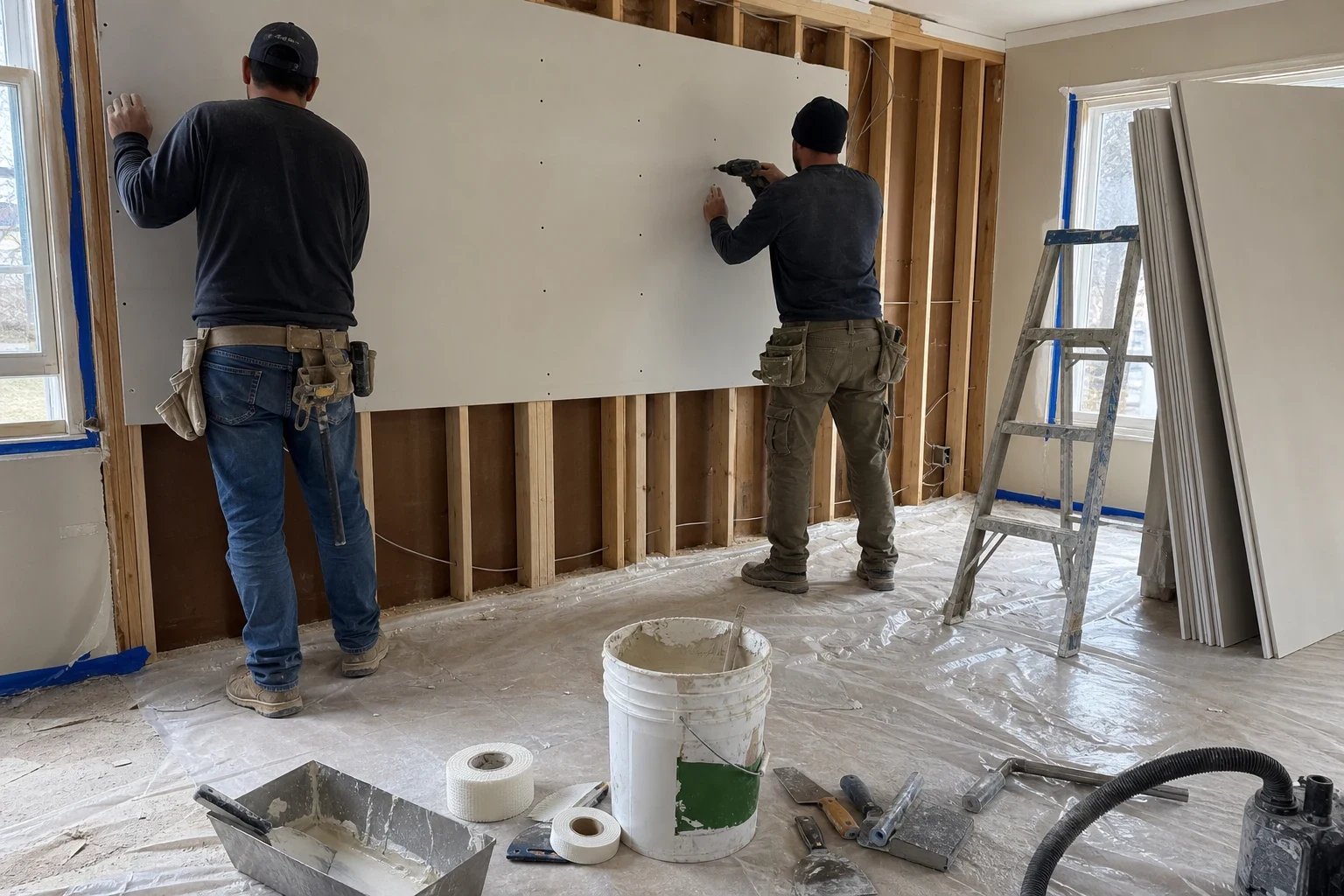
We repair, hang and finish drywall inside homes in Harrison, NJ. Every job starts with an explanation of the materials involved. You hear which board, which compound and which tape suit your wall or ceiling, and why, before any work is scheduled.
Why we talk materials first
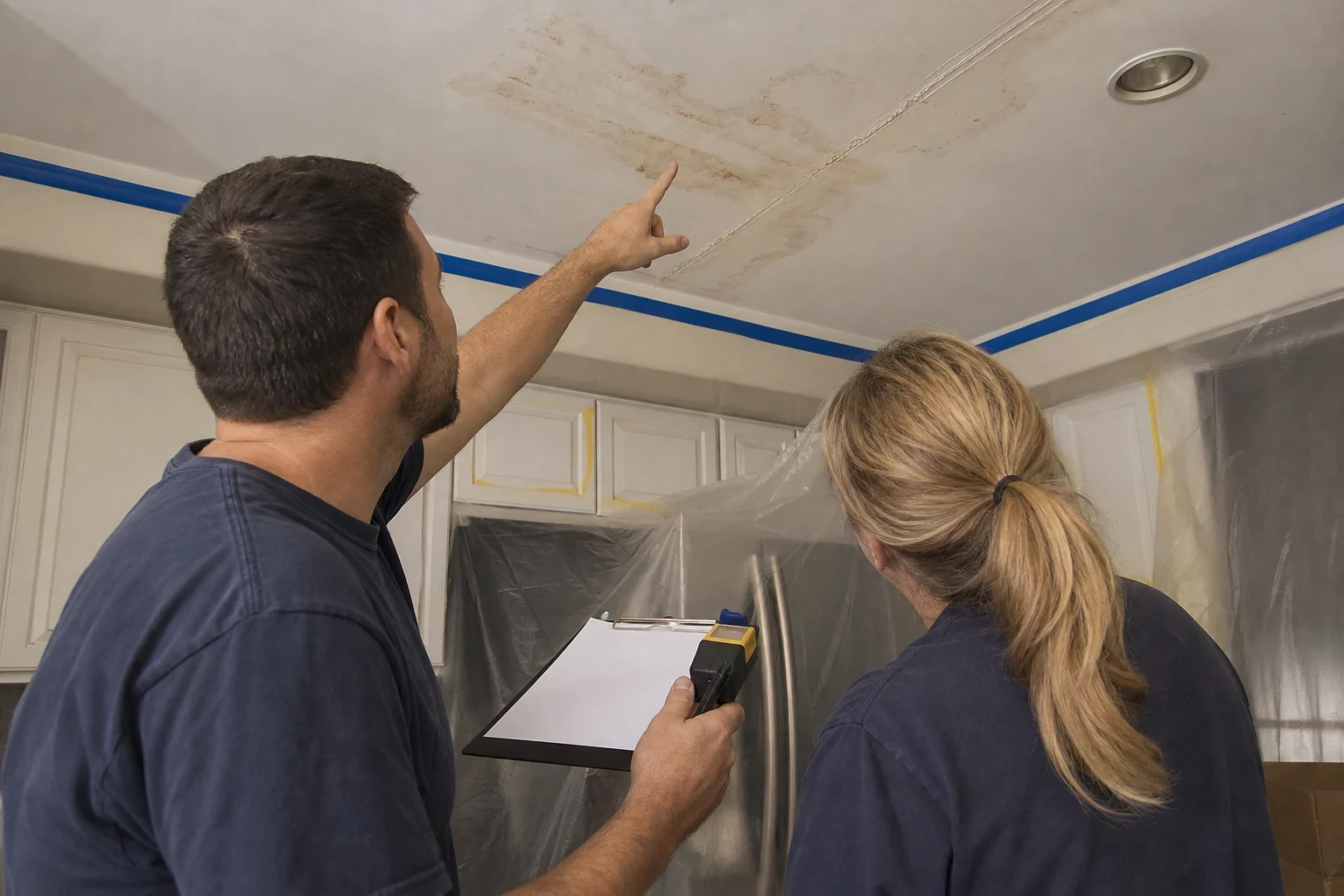
Many drywall repairs fail because the wrong material went in the first time. A bathroom wall patched with standard gypsum board instead of moisture-resistant board softens again. A ceiling crack covered with a skim of mud over a moving joint reopens after a season. We would rather spend ten minutes explaining that than come back to fix the same spot.
So we start by looking at what is already there. Older houses around Harrison often have plaster over wood lath, while additions and finished basements usually have half-inch drywall on studs. Those surfaces take a patch differently. Plaster needs a setting-type compound and sometimes a bonding agent, while drywall accepts premixed joint compound well. Thickness matters too: a 3/8-inch board set into a 5/8-inch wall leaves a ridge no amount of sanding can hide.
Once you know the options, you choose. Our written estimate names the materials line by line, so you can see where the cost comes from and what each choice changes. Then we protect the room, do the work and leave a clean work area.
How we work in your home
- 01
Board matched to the room
Standard gypsum board covers most walls. Near tubs and showers we use moisture-resistant board, and where a fire-rated wall is called for, such as one shared with an attached garage, we use 5/8-inch Type X. Ceilings with wide joist spacing get sag-resistant board.
- 02
Compound chosen for the job
Setting-type compound goes into deep fills and plaster because it hardens chemically and shrinks less. Lightweight topping goes on the final coats because it sands smooth. Mesh tape suits small flat patches, and paper tape goes on inside corners and long joints where strength counts.
- 03
Texture matching you can check
Knockdown, orange peel and smooth skim-coated walls each need a different tool and compound mix. We test the texture in a hidden spot first so you can compare it before we finish the repair.
- 04
Dust kept in the room
We hang plastic sheeting at doorways and cover floors and furniture. Sanding is done with vacuum-attached tools where the space allows. A paint touch-up over the finished patch can follow when your matching paint is on hand.
Where we work
Our drywall work happens in single-family houses, two-family homes and apartments across Harrison, plus Kearny, East Newark, Newark, Jersey City, Belleville, Bloomfield, East Orange, Orange, Irvington and Elizabeth. If you own or manage rentals, one call can cover a single unit or a whole building. Each unit gets its own breakdown of the repair and the board, compound and tape it needs, so every line on the estimate makes sense.
- Harrison
- Newark
- Kearny
- East Newark
- Jersey City
- Elizabeth
- East Orange
- Irvington
- Bloomfield
- Belleville
- Orange
Talk through your wall before anything gets cut
Describe the damage on the phone and we will explain which materials fit, what affects the cost and how the visit runs. You get a straight answer on whether a patch will hold or the board should be replaced.