ServicesDrywall Patching
Drywall Patching in Harrison
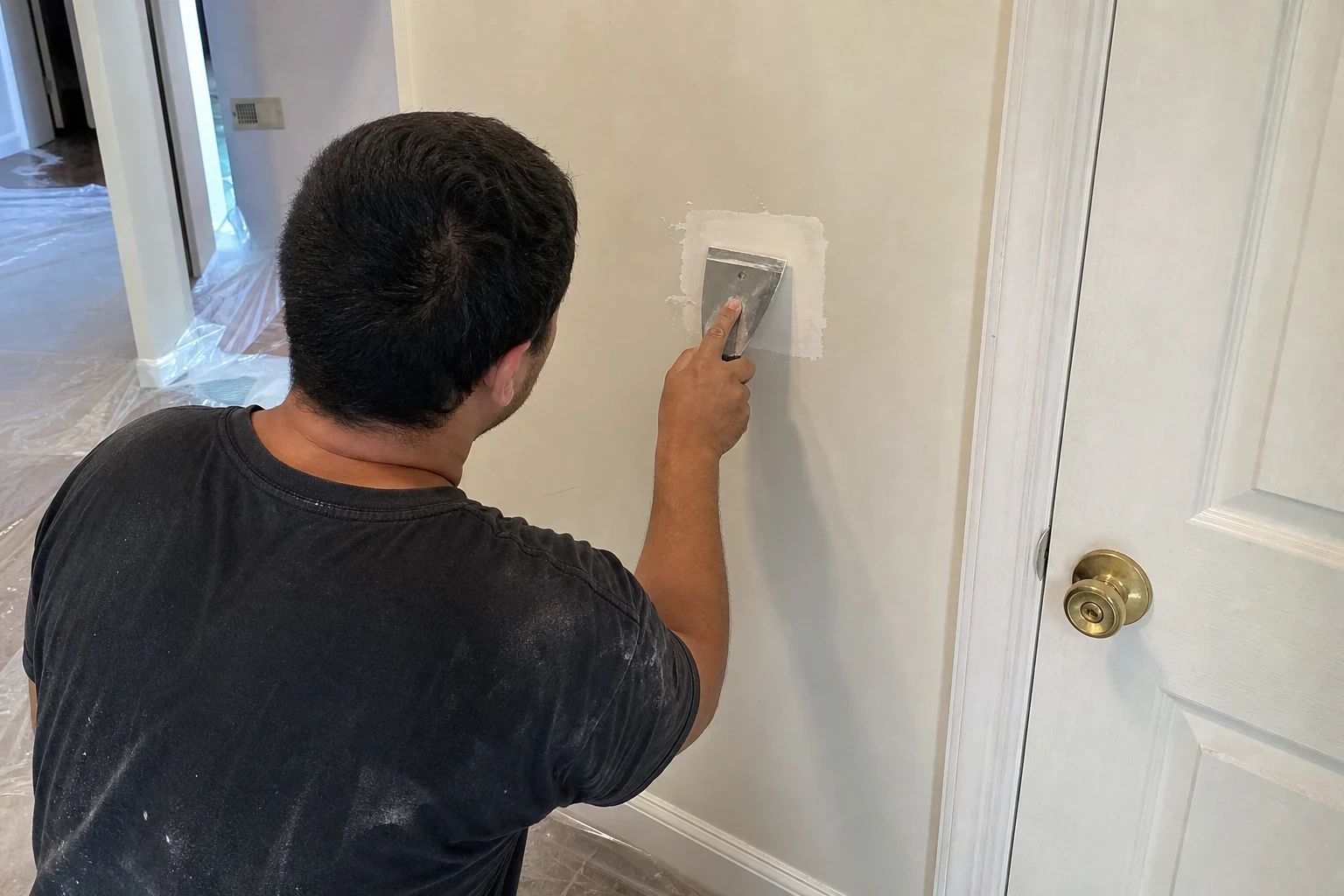
We close holes in drywall so they stay closed. That means choosing the patch method by the size of the hole, using setting compound where strength matters, and feathering the edges wide enough that the repair vanishes once it is primed and painted.
Which patch fits which hole
Most patches fail for one of two reasons: the wrong material for the size of the hole, or edges that were never feathered out. A nail pop or screw hole needs a lightweight spackle and nothing more. A doorknob dent through the face paper needs mesh or a paper-faced California patch. Anything over about six inches needs a new piece of gypsum board screwed to wood backing, because compound alone cannot span that gap without cracking.
We match the board thickness to your wall, usually 1/2 inch in living spaces and sometimes 5/8 inch on ceilings or garage walls, so the patch sits flush instead of proud or recessed. If the damage turns out to be wider than a patch can handle, such as a long crack, water-softened board or a sagging section, we will tell you and point you to our drywall repair or ceiling repair work instead.
What a patch job includes
Squaring the damaged area
We cut ragged holes back to a clean rectangle with a utility knife or oscillating saw. Square edges take tape and compound evenly, while torn paper bubbles under fresh mud.
Sealing torn face paper
Exposed brown paper soaks up moisture from joint compound and blisters. We seal it with a shellac-based or drywall primer before any compound goes on.
Backing for larger holes
For a cut-out patch we screw furring strips or scrap wood inside the cavity so the new board has something solid to fasten to. Without backing, the patch flexes every time someone leans on it.
Setting compound for the first coat
We fill and embed tape with setting-type compound, often called hot mud, in a 20- or 45-minute mix. It hardens by chemical reaction, shrinks very little and resists cracking far better than premixed mud in deep fills.
Finish coats and feathering
Lighter topping compound goes on in two thin coats, each wider than the last. A small hole may end up feathered 10 to 12 inches across so the light does not catch a ridge.
Texture matching and primer
If your wall has orange peel or knockdown texture, we match it before priming. We leave the patch primed and ready for color, or handle a paint touch-up if you have the original paint.
Signs a patch is the right call
- Doorknob holes
- A missing or worn-out door stop lets the knob punch straight through the face of the board. It is one of the most common patches we do, and we can suggest a stop so it does not happen again.
- Old anchor and mount holes
- Removed TV mounts, shelves and curtain rods leave clusters of anchor holes and torn paper. These fill quickly but need sealing first.
- Cut-outs from other trades
- Electricians and cable installers often open a square in the wall to fish wire. Those openings need backing and a new piece of board, not a wad of spackle.
- A previous patch that shows
- A visible bump, a ring under paint or a patch that cracked along its edge usually means it was never taped or feathered. We cut it out and redo it properly.
- Nail pops in a few spots
- A handful of popped fasteners can be reset and patched. If they run in long lines across a wall or ceiling, the board may need refastening, which falls under drywall repair.
How the visit runs
- 1
Look and measure
We check the hole size, board thickness, wall texture and whether anything is behind the opening, such as wiring. Then we explain which patch method fits and why.
- 2
Protect the room
Drop cloths go down, nearby furniture is moved or covered, and we keep a clean work area around the patch. Cutting and sanding are kept to the spot being repaired.
- 3
Cut, back and fill
We square the hole, add backing if needed, set the new board or mesh, and run the first coat of setting compound. Hot mud lets us recoat the same day on many jobs.
- 4
Finish coats and sanding
Thin topping coats are applied and sanded between passes with a fine sanding sponge or pole sander to keep dust down. Deeper fills may need a return visit once the compound has fully dried.
- 5
Texture, prime and clean up
We match texture, prime the patch and vacuum the area before we leave.
What moves the price of a patch
A patch is priced by the work and materials it actually takes, not by a flat count of holes. We walk you through the method on the phone or at the visit and give you a quote before starting. These are the things that change it.
- Size and number of holes
- Several small anchor holes in one wall are quick. A single cut-out large enough to need backing and a new piece of board takes more material and more coats.
- Texture on the wall
- Smooth walls are the simplest to blend. Orange peel or knockdown texture adds a step, and matching an older hand-applied texture takes more care.
- Plaster or gypsum board
- Houses built before drywall became standard often have original plaster walls in at least a room or two. Plaster on wood lath needs a bonding agent and different fill materials than gypsum board, so it is quoted on its own terms.
- Height and access
- Patches high on a stairwell wall or on a ceiling need ladders or staging and take longer to set up safely.
- Number of visits
- Deep fills and premixed finish coats need drying time. If a job needs a second trip to finish, that is part of the quote.
Drywall patching questions
- Can you just fill a big hole with spackle?
- Not if you want it to last. Spackle and premixed compound shrink and crack when they bridge a gap, and they have no strength across an open cavity. Anything bigger than a few inches gets mesh, a California patch or a new piece of board with backing.
- Will I be able to see the patch afterward?
- On a properly feathered and primed patch, no. What usually gives a patch away is the paint, since a fresh coat of an older color rarely matches exactly. Painting the patch corner to corner, or the full wall, hides it best.
- Will the repair be ready for paint when you leave?
- Yes. After the last coat is sanded and any texture is matched, the area gets a coat of drywall primer so the fresh compound does not flash through your finish paint as a dull spot. If you kept leftover paint from the original color, we can roll or brush a paint touch-up over the repair. Repainting whole walls or rooms is outside the work we take on.
- How many visits does a patch need?
- One trip covers most minor damage, because setting compound hardens fast enough for us to recoat before we pack up. Cut-outs that need backing, deep fills and textured walls can call for a short second trip once the compound has dried all the way through.
- What about dust?
- We cover the floor and nearby furniture, sand only the patch area with fine sponges, and vacuum when we are done. Sanding drywall always makes some dust, but on a patch it stays contained to a small area.
Tell us about the hole
Let us know roughly how big it is, where it is and whether the wall is smooth or textured. We will explain the patch method and give you a quote over the phone.